It would be a lie to say that the ladies have not been the dominant discipline of skating in the United States for the last half-century. In every Olympic Games since 1956 (with the exception of 1964), there has been at least one U.S. lady on the Olympic podium, and a total of seven American ladies have had the honor of stepping atop the platform reserved for the gold medalist. Surprising it will be when come the World Championships and the 2010 Olympics, an American man will have the best chance at securing a podium finish for the United States, not an American woman. The men were the only skating discipline where an American scored a medal at the last world championships (bronze-Johnny Weir, 2008) and the only American to have won a Grand Prix Final since 2002 is Jeremy Abbott.
The last three national championships have been hijacked by the Evan Lysacek vs. Johnny Weir battle for the title. Though a far cry from the intense and often bitter rivalry between Russian Olympic champions Alexei Yagudin and Evgeni Plushenko, there was quite a climax at last year's Nationals in St. Paul when Lysacek beat Weir in a tie-breaker by virtue of winning the free skate. To add to the tension, a chilling fluff piece was shown at the opening of NBC's broadcast of the men's free. The fluff was created especially for the two rivals in which Weir commented "Outside from skating, I don't really like Evan" and Lysacek called the rivalry "war" between the two skaters. However, in a compelling twist, a relative newcomer by the name of Jeremy Abbott looks to get the biggest slice of the pie in Cleveland. With a victory at the Grand Prix Final, an event where Weir settled for bronze and Lysacek failed to even qualify for, Abbott has established himself as an exceptionally creditable threat to both men, who have a combined total of five national titles between them, whereas Abbott has none.
While a compelling three-way fight for the title should no doubt be a thrilling event to witness, the story lines for the men's event at Nationals won't end there. The inconsistent but entertaining veteran Ryan Bradley, the reliable and steady Stephen Carriere, and newcomers Branden Mroz and Adam Rippon will be other faces to keep an eye on in Cleveland when the men's short program gets under way on January 23rd, 2009.
Skaters Featured in Post:
Jeremy Abbott
Ryan Bradley
Stephen Carriere
Evan Lysacek
Branden Mroz
Adam Rippon
Johnny Weir
Jeremy Abbott
Noteworthy Results: 2008 Grand Prix Final Champion, 2008 Cup of Russia-4th, 2008 Cup of China Champion, 2008 World Championships-11th, 2008 Four Continents Championships-5th, 2008 U.S. Figure Skating Championships-4th, 2007 Four Continents Championships-3rd, 2007 U.S. Figure Skating Championships-4th
Pros: Abbott's standing ovation from a thunderously approving crowd at this year's Grand Prix Final seemed to symbolize the transformation of Abbott's skating. Once a talented but notoriously inconsistent competitor, his victory in South Korea earned him a spot amongst the world's leading male figure skaters. Abbott, who has landed three clean quadruple toe loops in major international competition, has the three highest scores in the long program for any U.S. man this season, in addition to the two highest segment total scores (237.72 and 233.44). Lauded for his good musicality, first-rate jumping technique, and strong basic skating skills, on paper Jeremy has placed himself away from his competitors with the highest averages this season in the long program for both technical elements (79.98) and program components (74.87), the former of which being over nine points ahead of his closest rival, Johnny Weir.
Cons: Abbott has yet to even attempt the quadruple toe loop in either program this season, and did struggle at the recent Cup of Russia, singling his lutz in the short and doubling a triple toe in the long. Abbott's venture to do the quad in both programs at last year's nationals proved unsuccessful; stepping out of it on both attempts. While Abbott is not a full-fledged newcomer, having won the pewter medal at the last two nationals and participating at a world championship, this national championship will no doubt be Abbott's biggest test of his mettle in competition to date. Doing well at the Grand Prix isn't always a blessing, as proven by Matt Savoie winning the bronze (and having the highest U.S. finish) at the Grand Prix Final in 2001, and failing to make the world team. While the two scenarios aren't entirely comparable, as there were only two spots available for the world team in 2001 and Savoie would've otherwise gone (having finished with the bronze medal at nationals), it is an indication of just how slippery the ice really is, especially at nationals, considered the ultimate pressure competition of the year.
Outlook: Looking at the scores internationally this season, Abbott is the favorite to win his first U.S. national championship and is undoubtedly a shoo-in to be on his second world team. Inserting a quad into his already loaded bag of tricks could propel him to be in a position with quite a bit of breathing room to win. However, one must not forget that Abbott's quad has by no means been a walk in the park for him, and that Evan Lysacek and Johnny Weir, who have also stated their plans to include the jump, have far more experience nationally and internationally than Jeremy can claim. Abbott's performances at the last two Nationals have been neither brilliant nor dreadful, but Abbott may be required to skate nothing less than brilliantly if Weir and Lysacek skate with greater intensity than they have for the entirety of this season.
Ryan Bradley
Noteworthy Results: 2008 Trophee Eric Bombard-7th, 2008 Skate Canada-2nd, 2008 U.S. Figure Skating Championships-5th, 2007 Trophee Eric Bombard-5th, 2007 Skate America-6th, 2007 World Championships-15th, 2007 Four Continents Championships-4th, 2007 U.S. Figure Skating Championships-2nd
Pros: The three-time U.S. Collegiate champion sets himself apart with his unique programs that are full of vitality. Bradley has beaten Abbott, Lysacek, and Weir at some point in his career, and Ryan's decision to return to his former long program to musical selections from "Mambo en Sax," "Historia De Un Amor," and "El Cumbanchero" appeared to be a wise one at this season's Skate Canada, where he finished with a silver medal with a performance that many argued was rightful of gold. He also scored personal bests at that meet in both programs, a 72.50 in the short and a 140.25 in the free.
Cons: Bradley's nervy showing at the 2007 World Figure Skating Championships, his only world championship to date, has not given U.S. Figure Skating any incentive to send him to Los Angeles this year, where assuring three Olympic spots will be a must. The same can also be said for Ryan's abysmal performance at this year's Trophee Eric Bombard, where he fell twice in the free and did two many jump combinations en route to finishing 10th in the free and 7th overall. While a crowd favorite, he has hardly been a judges favorite throughout his career, having the second-lowest PCS average in the long program among the men featured in this post this season. Bradley's TES scores are also the lowest among the top U.S. men, which is all thanks to his weak showing at Trophee Eric Bombard.
Outlook: Known for his vibrant character on the ice, one can hope that Bradley enjoyed his time in Tokyo, Japan, for his first world championships, because with Abbott's rapid improvement and Lysacek and Weir's experience, one is unlikely to be finding Bradley skating on a television set in March when worlds arrive. Although a mightily inconsistent skater, Bradley is known to be an opportunist when it comes to taking advantage of detrimental performances from his fellow rivals and stepping up to bat and delivering the goods, the most notable example being his shocking silver medal finish at the 2007 U.S. Figure Skating Championships. With Abbott, Lysacek, and Weir predicted to lock up the world team spots, Bradley will still be motivated for a strong finish here to ensure him of Grand Prix assignments next season and a possible ticket to Four Continents if one of the top three opts out of being chosen to rest for Worlds. Currently 25 years of age, Bradley's quest to make a name for himself beyond 2010 could unfortunately prove to be too little, too late.
Stephen Carriere
Noteworthy Results: 2008 NHK Trophy-6th, 2008 Cup of China-2nd, 2008 World Championships-10th, 2008 Four Continents Championships-4th, 2008 U.S. Figure Skating Championships-3rd, 2007 NHK Trophy-3rd, 2007 Skate America-4th, 2007 World Junior Champion, 2007 U.S. Figure Skating Championships-9th, 2006 Junior Grand Prix Final Champion
Pros: Only 19 years of age and competing in his third senior national championship, the Wakefield, Massachusetts native is currently an impressive 9th on the seasons best list and among the cards that he brings to the table are his inordinate triple axels and his Tano-style double jumps for his combinations. Carriere has already been a proven commodity for the United States in his young career, placing 10th at last year's worlds which, combined with Johnny Weir's bronze medal, secured three spots for this year's World Championships. Carriere's seasons best in the long program, 145.25, is over three points higher than that of Evan Lysacek's 141.91. In addition to his great speed across the ice, Carriere is commended for his consistently cool head under pressure.
Cons: Carriere's hopes of making the Grand Prix Final after being an alternate last year descended with a poor showing at the NHK Trophy, where he singled both of his axel attempts in the long and under rotated his triple-triple in the short. His total at NHK regressed nearly 25 points from Cup of China, which is not a good sign for his preparation or political favor heading into nationals. While Carriere is immune to flutzing, Stephen has struggled with taking off of the correct edge for his flip, receiving "!" marks during both programs at Cup of China and an "e" deduction during the long at NHK. With a top-three finish being a must for Carriere to be named to the world team, his TES average this season in the long program is only 5th among the top U.S. men, and is 4th when it comes to average PCS marks in the long and seasons best totals. Unlike many of the other top men, Carriere does not compete a quadruple jump and while it is a legitimate argument to say that risking a jump isn't worth it, for Carriere it is a necessity because of his weaker artistic marks.
Outlook: Carriere, who once compared his skating to growing branches on a tree, may be forced to stop climbing up the standings when a top 3 finish and an additional trip to worlds look to be unlikely this year. Even if Carriere were to finish with a bronze medal and would thus knock one of Abbott, Weir, or Lysacek off the podium, all three of those men have more experience and reputation than that of Carriere and he could still feasibly be passed over anyway. While Carriere is an immensely talented skater, his skating is still considered by many to be fairly juniorish and his consistency is unfortunately too invaluable of a trinket to disguise his other weaknesses. However, Stephen can still get an assignment to the Four Continents Championships if one of the top three opts out of going, and Grand Prix assignments for next year should come his way barring a disastrous performance in Cleveland.
Evan Lysacek
Noteworthy Results: 2008 Skate Canada-3rd, 2008 Skate America-3rd, 2008 Four Continents Championships-3rd, 2008 U.S. Figure Skating Champion, 2007 Grand Prix Final-3rd, 2007 Cup of China-2nd, 2007 Skate America-2nd, 2007 World Figure Skating Championships-5th, 2007 Four Continents Championships Champion, 2007 U.S. Figure Skating Champion, 2006 Cup of China Champion, 2006 World Championships-3rd, 2006 Olympic Games-4th, 2005 World Championships-3rd
Pros: Every bit as experienced as the length of his 6'2'' frame, Lysacek will make his 10th trip to the national championship, and his eighth as a senior. Lysacek is decent in every area of his skating, and this event has historically been a kind one for Evan, with him being the champion for the last two years. A relentless competitor who is practically incapable of skating two sub-par programs in a competition, Lysacek has been credited with landing the quad in national and international competition, unlike Johnny Weir. Lysacek's personal best scores in the long program and overall are higher than that of Weir, and his personal best and seasons best in the short is the highest among any American skater. Lysacek is also known for his intelligence when handling the current code of points, maxing out his levels and points in non-jump elements and changing jump combinations during the program if he puts himself into a situation where such a task is necessary.
Cons: Evan received four downgrades and two wrong-edge "!" calls during the Grand Prix series, with that and more contributing to him failing to make the Grand Prix Final. Although Lysacek's PCS marks in the long at Skate America were very competitive (76.30), they regressed nearly six points to a 70.70 during his long at Skate Canada, which was a mostly clean performance. Lysacek hasn't successfully landed the quad since the Four Continents Championships in February 2008, and seems to have dropped it from his short program for good. Lysacek has been criticized in the past for his artificial artistry, arm-flailing footwork sequence extravaganzas, and, although irrelevant, his distasteful choices in costuming. Lysacek's failure to compete at worlds last year and making the Grand Prix Final this year may stunt his potential to do well at nationals, both in terms of confidence and how well he will be received from the judging panel.
Outlook: Lysacek may not be having the best season thus far, and people can complain all day long about his wonky technique on his triple axel, weaker basic skating skills, and hackneyed programs. However, one would be a fool to count the two-time world bronze medalist from the mix, and Evan has some very layered layers of breathing room to fall under before he will be unable to make the world team. As for winning the title, his forecast is fairly to partly cloudy with a definite chance of showers. To make the sun shine for him, he must get his quad consistent, start landing his triple axels without any ambiguity regarding whether the jump completed the required rotations, and to skate his programs with renewed life and intensity that has been missing this season. Having been away from competition since early November, Lysacek has surely worked vigorously to get back to the top. With reports saying how good his practice sessions have looked as of late, will practice make perfect in Cleveland?
Brandon Mroz
Noteworthy Results: 2008 Trophee Eric Bombard-5th, 2008 Skate Canada-7th, 2008 World Junior Championships-4th, 2008 U.S. Figure Skating Championships-2nd (juniors), 2007 Junior Grand Prix Final-2nd, 2007 Junior World Championships-4th, 2007 U.S. Figure Skating Championships-2nd (juniors), 2006 Junior Grand Prix Final-2nd
Pros: A fine technical skater, Mroz currently competes a quadruple toe-loop to open his long program. Having only received one downgrade this year, and one wrong-edge call ("!" for his triple flip), Mroz has the third highest TES average this season in the long (67.36), which is higher than that of Evan Lysacek or Stephen Carriere. Mroz generally receives level 3s and 4s for her non-jump elements, which create greater cushion for error when it comes to jumping. This championship is a perfect opportunity for Mroz to establish himself as a recognizable threat for the future while having little pressure on him to do well.
Cons: Mroz cannot hold a candle to the top U.S. men with it comes to program components, specifically when it comes choreography and interpretation. A rather mundane and juniorish skater when it comes to artistry, he is unlikely to be getting the marks in that department to land on the podium, which is evidenced by him having the lowest PCS average among the top U.S. men in the long this season (58.25). Mroz has had his fair share of errors throughout the Grand Prix, having not landed the quad successfully at either Skate Canada or Trophee Eric Bombard. Brandon has also struggled with landing his second triple axel in his long program, and throughout his junior career he has been forced to step under the shadow of Adam Rippon, who beat Mroz at the Junior Grand Prix Final, Nationals (junior level), and Junior Worlds last season.
Outlook: While Brandon has a ways to go before he becomes a top level skater, he is making definitive strides in the right direction. Having upgraded to a quad and placing a second triple axel after the half-way point of his long program (as a junior he placed both triple axels at the beginning of his long) this more ambitious jump composition will be a necessity for him beyond 2010. While Mroz is hardly in contention of making the world team, a ticket to Sofia, Bulgaria, for the junior world championships is easily realistic and he will be able to further hone his talents before potentially becoming a medal contender at nationals in the future.
Adam Rippon
Noteworthy Results: 2008 Cup of Russia-5th, 2008 Skate America-8th, 2008 World Junior Champion, 2008 U.S. Figure Skating Champion (Junior), 2007 Junior Grand Prix Final Champion, 2007 Junior Grand Prix Romania Champion
Pros: Blessed with an exceptionally malleable and compact body, the 19-year-old Rippon dominated the junior circuit last year, winning the Junior Grand Prix Final, U.S. Figure Skating Championships (junior level), and the Junior World Championship. At the 2008 U.S. Nationals, Paul Wylie commented during an NBC fluff that Rippon has all of the makings to be a future champion, and with airy jumps, blue-ribbon spins, and a flair for musicality, there is undoubtedly a good deal of validity to that statement. Rippon has added a triple axel to his jumping repertoire this season and has generally been a consistent skater in competition. Many have praised Adam's intelligent decision in making a coaching change mid-season from Nikolai Morozov to Brian Orser, as Orser has fewer students to devote his attention to than Morozov.
Cons: Although age-eligible to compete at worlds, Rippon will have a mightily tough act on his back if he hopes to qualify. Rippon has received negative GOEs on all five of his triple axel attempts this season, and fell on two of them. Rippon lost at least seven potential points when he was downgraded on three jumps in the long at Skate America, and his overall showing at that competition, his first senior showing, was an uncharacteristically poor one. Adam's averages this season in the long program for technical elements and program components are 2nd and 3rd lowest, respectively, among the men featured in this post. Rippon's personal best total score of 207.93, achieved at the recent Cup of Russia, is far lower than that of Abbott (237.72), Lysacek (233.11), Weir (231.78), Carriere (218.30), and Bradley (212.75).
Outlook: A diamond in the rough, Rippon will particularly need to focus on his content to out skate the big boys. Getting his triple axel consistent, and preferably putting two of them into his long program will he a big help to the Pennsylvania native, and learning a quad wouldn't hurt, either. Rippon is certainly improving, scoring personal bests in both phases of the competition at his most recent competition, Cup of Russia. Rippon has immaculate basic skating skills, including correct edge take-offs for both his flip and lutz, and Brian Orser's immense expertise of jumps like the triple axel should further fulfill the potential that Rippon has to offer. Although unlikely to be in contention for the world team, Rippon should use this competition to learn, grow, have fun, and take risks. With a former world champion as his coach, and two-time Grand Prix Final champion Yu-Na Kim as his training partner, Rippon will be able to witness the day-to-day happenings of the expectation and preparation of one of the top ladies figure skaters in the world, which should prove useful as soon as Rippon is ready to step into the spotlight and away from the shadows of other top skaters.
Johnny Weir
Noteworthy Results: 2008 Grand Prix Final-3rd, 2008 NHK Trophy-2nd, 2008 Skate America-3rd, 2008 World Figure Skating Championships-3rd, 2008 U.S. Figure Skating Championships-2nd, 2007 Grand Prix Final-4th, 2007 Cup of Russia Champion, 2007 Cup of China Champion, 2007 World Figure Skating Championships-8th, 2007 U.S. Figure Skating Championships-3rd, 2006 World Figure Skating Championships-7th, 2006 Olympic Games-5th, 2006 U.S. Figure Skating Champion, 2005 World Figure Skating Championships-4th, 2005 U.S. Figure Skating Champion, 2004 World Figure Skating Championships-5th, 2004 U.S. Figure Skating Champion
Pros: The only skater since Brian Boitano to have won three consecutive (2004-2006) national titles in the United States, Weir is a distinctly unique skater, from his costume and music selections to the fact that he rotates clockwise as opposed to counter-clockwise. Blessed with heavenly deep knees, assertive presentation, and a renewed fight for the top, these are all desirable cards for Weir to emerge victorious in Cleveland. Weir has butter-smooth triple axels and triple+triple combinations, and is hoping to land his quad for the first time in a major competition. Outside of the jumping department, Weir has very strong spins and footwork that routinely get in the level three and four range, and typically is a recipient of very desirable PCS marks in the U.S. and abroad.
Cons: Weir's biggest opponent at nationals may not be Jeremy Abbott, or Evan Lysacek, but rather something far more subtle called the code of points. Weir got lucky when he did too many combinations during the long at the 2006 U.S. Nationals, where he still had enough breathing room from the short to win. However, karma for his poor decision making in programs greeted him at the 2006 Olympics, where he only did one jump combination in the long and that, among other things, kept him from stepping onto the medals stand. Johnny left out a possible combination again at the 2008 U.S. Nationals, which mathematically speaking cost him a 4th title. At the world championships, Weir once again did two combinations (neither being a three-jump combo), but this time was saved by Daisuke Takahashi being credited with too many combinations, thus forfeiting his spot on the podium to Weir. As far as his skating rivals are concerned, Weir's personal best is lower than that of Lysacek and his seasons average for both TES (especially) and PCS in the long program is lower than that of Abbott. Weir is also routinely given an "e" deduction for liping his triple flip.
Outlook: Despite the retirements of Jeffrey Buttle and Stephane Lambiel and the current absence of Takahashi, the international mens field is immensely deep and Weir cannot afford anything less than a victory here to ensure him of realistic medal prospects when the world championships roll around, and the same holds true for the Olympics next year. Weir's criticism of the code of points is not without its irony, as Johnny has actually been helped by COP for the fact that the quad doesn't have to be a do-or-die jump. The reality is that fighting for every point is necessary, and with close results being commonplace an extra double toe DOES MATTER. Abbott does have the momentum heading into nationals, but by no means is Weir going to let him take an idyllic path to victory. Weir obviously hasn't started working with Galina Zmievskaya, known to be an extremely demanding coach, for nothing. His experience could prove to be his biggest asset, but per the numbers of this season Weir is a slight underdog heading into nationals, an unfamiliar position for him.
Podium Prediction:
Gold: Jeremy Abbott-Has had a phenomenal season thus far and as far as the data is concerned he shouldn't have a problem winning. However, his lack of experience compared to Weir and Lysacek and pressure from winning the Grand Prix Final will be obstacles to overcome. Seems to have the most momentum in terms of confidence and scoring favor, however.
Silver: Johnny Weir-Johnny has historically done well at nationals with a few exceptions (2003, 2007), and has enough experience to skate well despite all of the expectations surrounding him. However, his quad, and his inability to maximize his points in past programs could result in lower scores than what will be necessary to win the title.
Bronze: Evan Lysacek- Will likely look better than earlier in the season, but his quad is hit-or-miss, he has been getting more downgrades this season and his PCS have been regressing.
4th/Pewter: Stephen Carriere-Solid, consistent, and a great jumper, but isn't near to the level of the top three to have a good chance at going to worlds.
5th: Adam Rippon-Wise move to switch coaches; did extremely well at last year's nationals as a junior and it will be interesting to see if he will be intimidated or free-spirited when competing at the biggest event of his career thus far.
6th: Ryan Bradley-Has been a steady but unspectacular player at nationals for a number of years, and while his 2007 performance was a shock to all, the former statement is likely to wind up true in Cleveland.
7th: Brandon Mroz- A great opportunity for him to hold nothing back and gain feedback from judges for further improvement. With solid technical content, he should be right up there in the standings at nationals, although a podium finish is almost out of the question.
UPDATE: Kimmie Meissner has just announced her withdrawal from the U.S. Figure Skating Championships, due to a currently unspecified injury. This likely means the end of her season, and will be lucky just to get one GP assignment next year. Many are speculating that Meissner's retirement may be imminent. My new ladies prediction will be (in order from 1st to 10th): Flatt, Wagner, Zhang, Czisny, Nagasu, Liang, Bereswill, Gilles, Hacker, and Forte.
That is all.
Showing posts with label Nationals. Show all posts
Showing posts with label Nationals. Show all posts
Tuesday, January 13, 2009


Wednesday, December 31, 2008
2009 U.S. Figure Skating Championships-Ladies Preview Part 1

Above: The Quicken Loans Arena, site of the 2009 U.S. Figure Skating Championships. The same arena hosted the 2000 Nationals as well.
When the ladies take the ice for their short program at the 2009 U.S. Figure Skating Championships in Cleveland, Ohio, there will be no Michelle Kwan. There will also be no Sasha Cohen. The only skater in the field that has ever won a senior world medal of any color is 2006 World Champion Kimmie Meissner, who has yet to finish higher than eighth this season. So one can just conclude that the U.S. ladies are doomed, there will be no U.S. flags being raised at the medal ceremonies of the upcoming World Championships and next year's Olympic Games, and thus there is absolutely no reasoning behind watching the ladies event at this year's Nationals, right?
Wrong; quite the opposite actually. The ladies field that will take to the ice for their short program on January 22nd, 2009, will be one of the deepest that a U.S. national championship has ever hosted. While there may not be a clear star, each and every one of the U.S. ladies has their own story, background, and artistry, and the ladies that take to the ice in Cleveland have a burning desire to be nominated to the world championship team, which only has two spots this year. With there being no finalists at the Grand Prix this season, and considering that all of the major contenders are age-eligible to go to Worlds, everyone will (more or less) enter Nationals with a clean slate, and will have to rise above the pressure of this do-or-die competition to be rewarded for their hard work.
I will feature 14 skaters competing at Nationals and analyze their potential placement at Nationals, their chances for the world team, junior world team, four continents team, and potential for Grand Prix assignments next year.
Becky Bereswill
Alissa Czisny
Rachael Flatt
Joelle Forte
Alexe Gilles
Katrina Hacker
Emily Hughes
Beatrisa Liang
Angela Maxwell
Kimmie Meissner
Kristine Musademba
Mirai Nagasu
Ashley Wagner
Caroline Zhang
Red indicates commentary of skater is featured in part 1 of post
Blue indicates skater commentary of skater is featured in part 2 of post

Becky Bereswill
Noteworthy Results: 2008 Junior Grand Prix Final Champion, 2008 JGP Madrid-2nd place, 2008 JGP Courchevel-2nd place, 2008 U.S. Nationals-10th place
Pros: The recent winner of the Junior Grand Prix Final, Bereswill is a very polished skater with good extension in her spins and spirals. Bereswill has four different triple jumps (lutz, flip, loop, toe) in her arsenal and doesn't usually receive wrong-edge deductions for either her flip or lutz. At the Junior Grand Prix Final Bereswill did not get downgraded on any of her jumps and won the competition despite singling her loop in the long and doing the same with her lutz in the short.
Cons: Bereswill has relatively poor posture and very little height and distance on her jumps. An absence of a triple salchow will not help Bereswill technically, nor will her lower PCS marks help her out artistically(Becky received only a 46.16 in the long program at Junior Grand Prix Final). Bereswill has very little experience competing at the senior level; the only time she has done so was at the 2008 U.S. Figure Skating Championships where she finished a respectable 10th.
Outlook: While Bereswill is hardly in contention for making the world team, her recent victory at the Junior Grand Prix Final should give her an added boost of confidence and possibly more attention from the judges, as she beat some other up-and-coming U.S. skaters in South Korea including Alexe Gilles, Angela Maxwell, and Kristine Musademba. A good finish here could prompt her to compete in a grand prix assignment next season, which could pave the way for success beyond 2010 (as she is unlikely to be contending for an Olympic berth) if she chooses to stick around.
Alissa Czisny
Pros: The recent winner of the Junior Grand Prix Final, Bereswill is a very polished skater with good extension in her spins and spirals. Bereswill has four different triple jumps (lutz, flip, loop, toe) in her arsenal and doesn't usually receive wrong-edge deductions for either her flip or lutz. At the Junior Grand Prix Final Bereswill did not get downgraded on any of her jumps and won the competition despite singling her loop in the long and doing the same with her lutz in the short.
Cons: Bereswill has relatively poor posture and very little height and distance on her jumps. An absence of a triple salchow will not help Bereswill technically, nor will her lower PCS marks help her out artistically(Becky received only a 46.16 in the long program at Junior Grand Prix Final). Bereswill has very little experience competing at the senior level; the only time she has done so was at the 2008 U.S. Figure Skating Championships where she finished a respectable 10th.
Outlook: While Bereswill is hardly in contention for making the world team, her recent victory at the Junior Grand Prix Final should give her an added boost of confidence and possibly more attention from the judges, as she beat some other up-and-coming U.S. skaters in South Korea including Alexe Gilles, Angela Maxwell, and Kristine Musademba. A good finish here could prompt her to compete in a grand prix assignment next season, which could pave the way for success beyond 2010 (as she is unlikely to be contending for an Olympic berth) if she chooses to stick around.
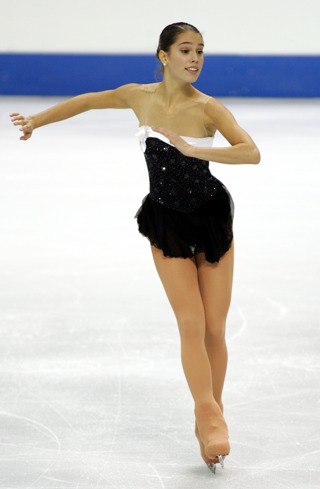
Alissa Czisny
Noteworthy Results: 2008 Cup of Russia-4th, 2008 Skate Canada-3rd, 2008 U.S. Figure Skating Championships-9th, 2007 World Championships-15th, 2007 U.S. Figure Skating Championships-3rd, 2005 Grand Prix Final-6th, 2005 Skate Canada Champion
Pros: Arguably the most polished ladies skater that the U.S. currently has, the 21-year-old Czisny is now a veteran of the national championship, competing on the senior level for the 7th consecutive year. Known for her expression, extension, and immaculate spinning technique, Czisny won the free skate at the 2007 Nationals and is capable of scoring highly if she skates cleanly. Czisny has had a good season thus far, winning bronze at Skate Canada, placing 4th at Cup of Russia, and winning the Nebelhorn Trophy over Laura Lepisto and Akiko Suzuki.
Cons: Czisny is the definition of inconsistency; even her own inconsistency is inconsistent. Although she skated very well at Skate Canada, Alissa once again succumbed to nerves at Cup of Russia, where she fell a total of three times throughout the competition. A similar scenario occurred when Alissa had the skate of her life at the 2007 Nationals, and went on to regress at Four Continents and completely bomb at Worlds. Czisny has not skated a clean short program in eternity and her clean free skates come infrequently. Czisny is plagued by downgrades as well, especially on her lutz and her flip. Essentially, every single one of Czisny's problems lie in her jumps.
Outlook: Czisny is a great example of a "what if" skater. What if she were to pull it all together and skate cleanly; what if she were to stop being a tentative headcase and start becoming a determined, confident competitor. Czisny's average PCS marks in the long programs from both of her Grand Prixs (52.24) is the 2nd highest average PCS produced this season from any of the senior U.S. ladies, but those PCS marks aren't going to get Alissa anywhere if her triple jumps aren't ready to be landed under pressure. An advantage Czisny has over some of her competitors is that she realistically doesn't need others mistakes to get her on the podium. She has all of the ingredients for big marks, so Czisny getting on the world team (she would likely do so with a top 2 finish) is her opportunity to take. USFSA could be put in an undesirable situation if Czisny wins the national title (thus guaranteeing her spot to L.A., unlike finishing 2nd) and then subsequently goes to Worlds with the newfound pressure of being national champion and bombs. Such a scenario would only allow two U.S. skaters to compete in next year's Olympics.

Rachael Flatt
Part 2 to come shortly. That is all.
Pros: Arguably the most polished ladies skater that the U.S. currently has, the 21-year-old Czisny is now a veteran of the national championship, competing on the senior level for the 7th consecutive year. Known for her expression, extension, and immaculate spinning technique, Czisny won the free skate at the 2007 Nationals and is capable of scoring highly if she skates cleanly. Czisny has had a good season thus far, winning bronze at Skate Canada, placing 4th at Cup of Russia, and winning the Nebelhorn Trophy over Laura Lepisto and Akiko Suzuki.
Cons: Czisny is the definition of inconsistency; even her own inconsistency is inconsistent. Although she skated very well at Skate Canada, Alissa once again succumbed to nerves at Cup of Russia, where she fell a total of three times throughout the competition. A similar scenario occurred when Alissa had the skate of her life at the 2007 Nationals, and went on to regress at Four Continents and completely bomb at Worlds. Czisny has not skated a clean short program in eternity and her clean free skates come infrequently. Czisny is plagued by downgrades as well, especially on her lutz and her flip. Essentially, every single one of Czisny's problems lie in her jumps.
Outlook: Czisny is a great example of a "what if" skater. What if she were to pull it all together and skate cleanly; what if she were to stop being a tentative headcase and start becoming a determined, confident competitor. Czisny's average PCS marks in the long programs from both of her Grand Prixs (52.24) is the 2nd highest average PCS produced this season from any of the senior U.S. ladies, but those PCS marks aren't going to get Alissa anywhere if her triple jumps aren't ready to be landed under pressure. An advantage Czisny has over some of her competitors is that she realistically doesn't need others mistakes to get her on the podium. She has all of the ingredients for big marks, so Czisny getting on the world team (she would likely do so with a top 2 finish) is her opportunity to take. USFSA could be put in an undesirable situation if Czisny wins the national title (thus guaranteeing her spot to L.A., unlike finishing 2nd) and then subsequently goes to Worlds with the newfound pressure of being national champion and bombs. Such a scenario would only allow two U.S. skaters to compete in next year's Olympics.
Rachael Flatt
Noteworthy Results: 2008 Cup of Russia-2nd, 2008 Skate America-4th, 2008 Junior World Champion, 2008 U.S. Figure Skating Championships-2nd, 2007 Junior Grand Prix Final-2nd, 2007 U.S. Figure Skating Championships-5th
Pros: Minus the axel, Flatt has a full arsenal of triple jumps, including triple-triple combinations that are planned for both her short and long. Flatt's consistency is undoubtedly her most prized weapon, evidenced by the fact that she did not fall or pop a jump (with the exception of a single axel during the free program at Skate America) throughout any of her 2008 competition skates. Flatt usually rotates her triple jumps and is commended for her good musicality and difficult jumping passes after the half-way point of the program that earn additional bonus marks.
Cons: Flatt's "flat" skating is evident by the PCS marks she has received this season, an example being that she only received a 49.28 (avg: 6.16) at Cup of Russia, where she skated a clean program with six triple jumps. In comparison, Carolina Kostner received a higher free skate mark at that competition despite having more flaws, which means that Rachael has no room for error to keep up with the big girls. Flatt's hunched posture, lack of speed, and unremarkable spinning ability leave her with no choice but to land her triple jumps to receive decent marks. Rachael's triple flip+triple loop, an element she is debuting this season, has only been attempted once thus far, which resulted in the back end of the combination getting downgraded. It is also worth noting that Flatt has been receiving "!"s for her lutzes, indicating a slight change of edge prior to the takeoff of the jump.
Outlook: While Flatt's component scores may not be desirable, her consistency alone is worthy of a ticket to her first World Championships. Some felt Rachael should have won the title last year, which may have proved to be a blessing in disguise as she didn't have as much pressure on her when becoming a senior. But make no mistake, Flatt is the favorite to win her first national title in Cleveland, and maybe the only skater with a track record that will allow her to finish outside the top two and still make the world team. If Flatt maintains her consistency just likes she maintains her 4.0 GPA in school, she should be on to bigger and better things when these Nationals have concluded.

Joelle Forte
Noteworthy Results: 2008 Eastern Sectionals Champion, 2008 North Atlantic Regionals Champion
Pros: Joelle is a very strong skater technically, capable of consistently landing six triple jumps in her long program. Forte's forte is her great jumping technique, which is obvious when looking at her protocols from both the North Atlantic Regionals and Eastern Sectionals this year, where she didn't get a single downgrade or wrong-edge deduction. Forte consistently gets level 3s and 4s for her spins, footwork, and spiral sequences. Forte received the two highest total scores throughout the entire regional/sectional process this season for the ladies, a 150.92 at Eastern Sectionals and a 147.48 at North Atlantic Regionals.
Cons: Forte lags behind the other U.S. ladies significantly when it comes to artistry, flexibility, musicality, speed, and transitions. Her PCS marks reflect that, scoring 39.80 (avg: 4.975) at Eastern Sectionals this year with a clean program (her technical marks were a whooping 19.51 points higher than her artistic marks at that particular competition). Joelle has extremely little experience out on the big stage, with her only trip to nationals in her entire career taking place in 2000 when she was at the novice level. Even though jumps are Forte's strength, she doesn't have a triple flip in her repertoire and repeats one of the easier jumps, a triple salchow, in her long program.
Outlook: Forte's skating is ruled by its jumps, with all of the other components taking a back seat. Don't expect Joelle's PCS marks to be at all competitive at Nationals, even if she is to skate a clean program. Forte would likely be thrilled with a top 10 finish, and can do so if she maintains her excellent consistency. A good finish here could propel her for bigger and better things if she chooses to remain on the scene beyond 2010, as her prospects for a world team in 2009 and Olympic team in 2010 are bleak.

Alexe Gilles
Noteworthy Results: 2008 Junior Grand Prix Final-3rd, 2008 JGP Cape Town Champion, 2008 JGP Mexico City-2nd, 2008 U.S. Figure Skating Championships Champion (junior)
Pros: Winner of the U.S. National title on the junior level last year and the bronze medal at the recent Junior Grand Prix Final, Alexe Gilles is a relative newcomer with elegance and a complete package of triple jumps minus the axel. Her current seasons best for her short program (54.24) is higher than that of Alissa Czisny or Caroline Zhang, and the program component marks she received for her short at Junior Grand Prix Final were the highest among all of the junior ladies competing. Gilles also avoids wrong-edge deductions on her flip and lutz, which tend to plague the technical marks of other world-class skaters.
Cons: Gilles' youth and inexperience showed at the Junior Grand Prix Final, where Gilles singled her lutz in her long program and went on to under rotate her triple salchow. Both errors were especially costly because they were in combinations after the halfway point, which have the potential to be big point getters. Gilles has never competed as a senior before and her triple toe+triple toe combination has been an inconsistent one for her, having only completed it in two out of six skates thus far this season. Her component marks have been hovering around the mid-40s for the long, which are unlikely to be competitive in Cleveland, and received some level 1s and 2s on her non-jump elements at JGPF.
Outlook: Gilles has the content to do well in Cleveland, with a possible triple toe+triple toe (worth 8.0 points) in both programs, and a triple lutz+double toe(worth 8.03) and triple salchow+double toe+double loop(also worth 8.03) after the half-way point in the long. Though a podium finish seems unlikely, a top 10 finish is not at all a far-fetched placement for Gilles to end up, and even a top five finish is possible. A good performance here could get Gilles a coveted Grand Prix spot next year, which could make her an outside threat to go to Vancouver and/or become a future international contender from then on.
Katrina Hacker
Noteworthy Results: 2008 NHK Trophy-6th, 2008 Cup of China-8th, 2008 Four Continents Championships-6th, 2008 U.S. Figure Skating Championships-6th
Pros: Hacker burst out onto the scene last season when she surprised many by making the final group for the free skate at Nationals, where she finished 6th. Passed over by the selection committee to not go to Worlds instead of Kimmie Meissner, despite beating her at Nationals, Hacker went on to have the highest American finish at the Four Continents Championships, 6th, which would have also been the highest American finish at Worlds (taking her 4CCs score, she would have finished just ahead of Meissner who placed 7th). Hacker is noted for her elegant artistry, excellent flexibility, and musicality. Her unique short program to the music of "On Golden Pond" has been a fan-favorite this season and Katrina is generally a consistent skater.
Cons: During the Grand Prix series, Hacker had dropped her triple lutz from her jumping repertoire, and does not do a triple flip either. Her triple loop has also been inconsistent, falling on it during the free skate at Cup of China, and nearly falling on it during the free at NHK Trophy. She has had a total of six jumps downgraded thus far this season, including two double jumps. Her PCS marks have been lagging behind as well, averaging only 21.9 in the short and 44.38 in the long during her two Grand Prixs this season.
Outlook: A Golden Skate interview with Katrina back in June, "Hacker Can Hack It," mentioned she was practicing triple flips, triple toe+triple toe combinations, and even triple salchow+triple loops. However, it appears as though a back injury over the summer (bulging disk) has stalled those plans, as well as her growth spurt prior to the start of this season. There may not be much longer to put those elements on hold, however, because Katrina has stated she wishes to enroll at Princeton in the fall and has already deferred enrollment to compete this season. Unless if she were to pull an Emily Hughes and combine school and skating, and considering that Hacker's only realistic shot for a world/Olympic team came last season, this could indeed be Katrina's last competition. As for potential placements in this meet, a top 10 finish is definitely within reach, although a placement in the top 5 will be a tall order.

Emily Hughes
Noteworthy Results: 2008 Trophee Eric Bombard-9th, 2007 Skate Canada-4th, 2007 Skate America-4th, 2007 World Championships-9th, 2007 Four Continents Championships-2nd, 2007 U.S. Figure Skating Championships-2nd, 2006 World Championships-8th, 2006 Olympics-7th, 2006 U.S. Figure Skating Championships-3rd
Pros: Coming off of a hip injury, Emily has all of her jumps back minus the triple loop which she hasn't competed since the Olympics. Hughes is known for good height on her triples, excellent flexibility, and good spins. Hughes doesn't have any wrong-edge deductions for either her flip or lutz, and is one of the most experienced ladies skaters currently competing in the United States. Having not had a good season thus far, there will be little pressure for Hughes to do well in Cleveland.
Cons: From the start of the season, it looks like the Emily Hughes that has returned to competitive skating is an entirely different skater than the Emily Hughes that took silver at Nationals and Four Continents, placed top 10 at Worlds twice, and finished 7th at the Olympics after being called in at the last minute. After placing only third at Regionals, many felt that Hughes was clearly not in shape to represent the U.S. at Trophee Eric Bombard, and was only doing so to avoid going to sectionals and not finishing high enough to advance to Nationals. Hughes proved her doubters right, as she fell four times in Paris during her first international meet in over a year and received five downgrades throughout the course of the competition. Even the Emily Hughes from 2006/2007 would still be unlikely to be contending for a world team berth this year, without any triple+triple combination or a triple loop. Hughes' personal best free skate score, 111.26, is a little over four points lower than the TOTAL score Hughes received in Paris.
Outlook: Rachael Ray proclaimed on her show that Emily Hughes had to win two gold medals in Vancouver to one-up her sister. While such a scenario is less likely than North Korea becoming a democracy, Emily is going to be entering her 4th nationals on the senior level as quite the wild card because no one knows how much she will have improved by the time January 22nd rolls around. Hughes' chances for even a top 10 finish appear to be pretty invisible, and if Hughes isn't in the top 10 after the short she won't even be broadcast by NBC in the long. Emily is currently #70 on the seasons best list, and will have no chance to get a GP invite next season if she drops out of the top 75 unless if USFSA were to appoint her to Skate America, which surely won't happen. With a very poor season thus far that makes even Kimmie Meissner's season look decent, some are speculating that this could be Hughes' swan song. For those who think otherwise, Hughes does deserve to compete at Nationals, because she has represented the U.S. very well over the last few years in competition and she is not taking another skater's spot to go to Nationals. Facing several youngsters, it will be interesting to see if Hughes can pull herself together to skate decently and perhaps finish in the top 10. Unlikely, yes, but such a case should not be impossible.
Pros: Minus the axel, Flatt has a full arsenal of triple jumps, including triple-triple combinations that are planned for both her short and long. Flatt's consistency is undoubtedly her most prized weapon, evidenced by the fact that she did not fall or pop a jump (with the exception of a single axel during the free program at Skate America) throughout any of her 2008 competition skates. Flatt usually rotates her triple jumps and is commended for her good musicality and difficult jumping passes after the half-way point of the program that earn additional bonus marks.
Cons: Flatt's "flat" skating is evident by the PCS marks she has received this season, an example being that she only received a 49.28 (avg: 6.16) at Cup of Russia, where she skated a clean program with six triple jumps. In comparison, Carolina Kostner received a higher free skate mark at that competition despite having more flaws, which means that Rachael has no room for error to keep up with the big girls. Flatt's hunched posture, lack of speed, and unremarkable spinning ability leave her with no choice but to land her triple jumps to receive decent marks. Rachael's triple flip+triple loop, an element she is debuting this season, has only been attempted once thus far, which resulted in the back end of the combination getting downgraded. It is also worth noting that Flatt has been receiving "!"s for her lutzes, indicating a slight change of edge prior to the takeoff of the jump.
Outlook: While Flatt's component scores may not be desirable, her consistency alone is worthy of a ticket to her first World Championships. Some felt Rachael should have won the title last year, which may have proved to be a blessing in disguise as she didn't have as much pressure on her when becoming a senior. But make no mistake, Flatt is the favorite to win her first national title in Cleveland, and maybe the only skater with a track record that will allow her to finish outside the top two and still make the world team. If Flatt maintains her consistency just likes she maintains her 4.0 GPA in school, she should be on to bigger and better things when these Nationals have concluded.
Joelle Forte
Noteworthy Results: 2008 Eastern Sectionals Champion, 2008 North Atlantic Regionals Champion
Pros: Joelle is a very strong skater technically, capable of consistently landing six triple jumps in her long program. Forte's forte is her great jumping technique, which is obvious when looking at her protocols from both the North Atlantic Regionals and Eastern Sectionals this year, where she didn't get a single downgrade or wrong-edge deduction. Forte consistently gets level 3s and 4s for her spins, footwork, and spiral sequences. Forte received the two highest total scores throughout the entire regional/sectional process this season for the ladies, a 150.92 at Eastern Sectionals and a 147.48 at North Atlantic Regionals.
Cons: Forte lags behind the other U.S. ladies significantly when it comes to artistry, flexibility, musicality, speed, and transitions. Her PCS marks reflect that, scoring 39.80 (avg: 4.975) at Eastern Sectionals this year with a clean program (her technical marks were a whooping 19.51 points higher than her artistic marks at that particular competition). Joelle has extremely little experience out on the big stage, with her only trip to nationals in her entire career taking place in 2000 when she was at the novice level. Even though jumps are Forte's strength, she doesn't have a triple flip in her repertoire and repeats one of the easier jumps, a triple salchow, in her long program.
Outlook: Forte's skating is ruled by its jumps, with all of the other components taking a back seat. Don't expect Joelle's PCS marks to be at all competitive at Nationals, even if she is to skate a clean program. Forte would likely be thrilled with a top 10 finish, and can do so if she maintains her excellent consistency. A good finish here could propel her for bigger and better things if she chooses to remain on the scene beyond 2010, as her prospects for a world team in 2009 and Olympic team in 2010 are bleak.
Alexe Gilles
Noteworthy Results: 2008 Junior Grand Prix Final-3rd, 2008 JGP Cape Town Champion, 2008 JGP Mexico City-2nd, 2008 U.S. Figure Skating Championships Champion (junior)
Pros: Winner of the U.S. National title on the junior level last year and the bronze medal at the recent Junior Grand Prix Final, Alexe Gilles is a relative newcomer with elegance and a complete package of triple jumps minus the axel. Her current seasons best for her short program (54.24) is higher than that of Alissa Czisny or Caroline Zhang, and the program component marks she received for her short at Junior Grand Prix Final were the highest among all of the junior ladies competing. Gilles also avoids wrong-edge deductions on her flip and lutz, which tend to plague the technical marks of other world-class skaters.
Cons: Gilles' youth and inexperience showed at the Junior Grand Prix Final, where Gilles singled her lutz in her long program and went on to under rotate her triple salchow. Both errors were especially costly because they were in combinations after the halfway point, which have the potential to be big point getters. Gilles has never competed as a senior before and her triple toe+triple toe combination has been an inconsistent one for her, having only completed it in two out of six skates thus far this season. Her component marks have been hovering around the mid-40s for the long, which are unlikely to be competitive in Cleveland, and received some level 1s and 2s on her non-jump elements at JGPF.
Outlook: Gilles has the content to do well in Cleveland, with a possible triple toe+triple toe (worth 8.0 points) in both programs, and a triple lutz+double toe(worth 8.03) and triple salchow+double toe+double loop(also worth 8.03) after the half-way point in the long. Though a podium finish seems unlikely, a top 10 finish is not at all a far-fetched placement for Gilles to end up, and even a top five finish is possible. A good performance here could get Gilles a coveted Grand Prix spot next year, which could make her an outside threat to go to Vancouver and/or become a future international contender from then on.
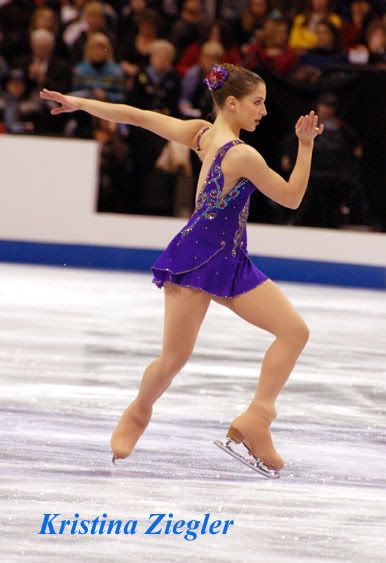
Katrina Hacker
Noteworthy Results: 2008 NHK Trophy-6th, 2008 Cup of China-8th, 2008 Four Continents Championships-6th, 2008 U.S. Figure Skating Championships-6th
Pros: Hacker burst out onto the scene last season when she surprised many by making the final group for the free skate at Nationals, where she finished 6th. Passed over by the selection committee to not go to Worlds instead of Kimmie Meissner, despite beating her at Nationals, Hacker went on to have the highest American finish at the Four Continents Championships, 6th, which would have also been the highest American finish at Worlds (taking her 4CCs score, she would have finished just ahead of Meissner who placed 7th). Hacker is noted for her elegant artistry, excellent flexibility, and musicality. Her unique short program to the music of "On Golden Pond" has been a fan-favorite this season and Katrina is generally a consistent skater.
Cons: During the Grand Prix series, Hacker had dropped her triple lutz from her jumping repertoire, and does not do a triple flip either. Her triple loop has also been inconsistent, falling on it during the free skate at Cup of China, and nearly falling on it during the free at NHK Trophy. She has had a total of six jumps downgraded thus far this season, including two double jumps. Her PCS marks have been lagging behind as well, averaging only 21.9 in the short and 44.38 in the long during her two Grand Prixs this season.
Outlook: A Golden Skate interview with Katrina back in June, "Hacker Can Hack It," mentioned she was practicing triple flips, triple toe+triple toe combinations, and even triple salchow+triple loops. However, it appears as though a back injury over the summer (bulging disk) has stalled those plans, as well as her growth spurt prior to the start of this season. There may not be much longer to put those elements on hold, however, because Katrina has stated she wishes to enroll at Princeton in the fall and has already deferred enrollment to compete this season. Unless if she were to pull an Emily Hughes and combine school and skating, and considering that Hacker's only realistic shot for a world/Olympic team came last season, this could indeed be Katrina's last competition. As for potential placements in this meet, a top 10 finish is definitely within reach, although a placement in the top 5 will be a tall order.
Emily Hughes
Noteworthy Results: 2008 Trophee Eric Bombard-9th, 2007 Skate Canada-4th, 2007 Skate America-4th, 2007 World Championships-9th, 2007 Four Continents Championships-2nd, 2007 U.S. Figure Skating Championships-2nd, 2006 World Championships-8th, 2006 Olympics-7th, 2006 U.S. Figure Skating Championships-3rd
Pros: Coming off of a hip injury, Emily has all of her jumps back minus the triple loop which she hasn't competed since the Olympics. Hughes is known for good height on her triples, excellent flexibility, and good spins. Hughes doesn't have any wrong-edge deductions for either her flip or lutz, and is one of the most experienced ladies skaters currently competing in the United States. Having not had a good season thus far, there will be little pressure for Hughes to do well in Cleveland.
Cons: From the start of the season, it looks like the Emily Hughes that has returned to competitive skating is an entirely different skater than the Emily Hughes that took silver at Nationals and Four Continents, placed top 10 at Worlds twice, and finished 7th at the Olympics after being called in at the last minute. After placing only third at Regionals, many felt that Hughes was clearly not in shape to represent the U.S. at Trophee Eric Bombard, and was only doing so to avoid going to sectionals and not finishing high enough to advance to Nationals. Hughes proved her doubters right, as she fell four times in Paris during her first international meet in over a year and received five downgrades throughout the course of the competition. Even the Emily Hughes from 2006/2007 would still be unlikely to be contending for a world team berth this year, without any triple+triple combination or a triple loop. Hughes' personal best free skate score, 111.26, is a little over four points lower than the TOTAL score Hughes received in Paris.
Outlook: Rachael Ray proclaimed on her show that Emily Hughes had to win two gold medals in Vancouver to one-up her sister. While such a scenario is less likely than North Korea becoming a democracy, Emily is going to be entering her 4th nationals on the senior level as quite the wild card because no one knows how much she will have improved by the time January 22nd rolls around. Hughes' chances for even a top 10 finish appear to be pretty invisible, and if Hughes isn't in the top 10 after the short she won't even be broadcast by NBC in the long. Emily is currently #70 on the seasons best list, and will have no chance to get a GP invite next season if she drops out of the top 75 unless if USFSA were to appoint her to Skate America, which surely won't happen. With a very poor season thus far that makes even Kimmie Meissner's season look decent, some are speculating that this could be Hughes' swan song. For those who think otherwise, Hughes does deserve to compete at Nationals, because she has represented the U.S. very well over the last few years in competition and she is not taking another skater's spot to go to Nationals. Facing several youngsters, it will be interesting to see if Hughes can pull herself together to skate decently and perhaps finish in the top 10. Unlikely, yes, but such a case should not be impossible.
Part 2 to come shortly. That is all.
Subscribe to:
Posts (Atom)